
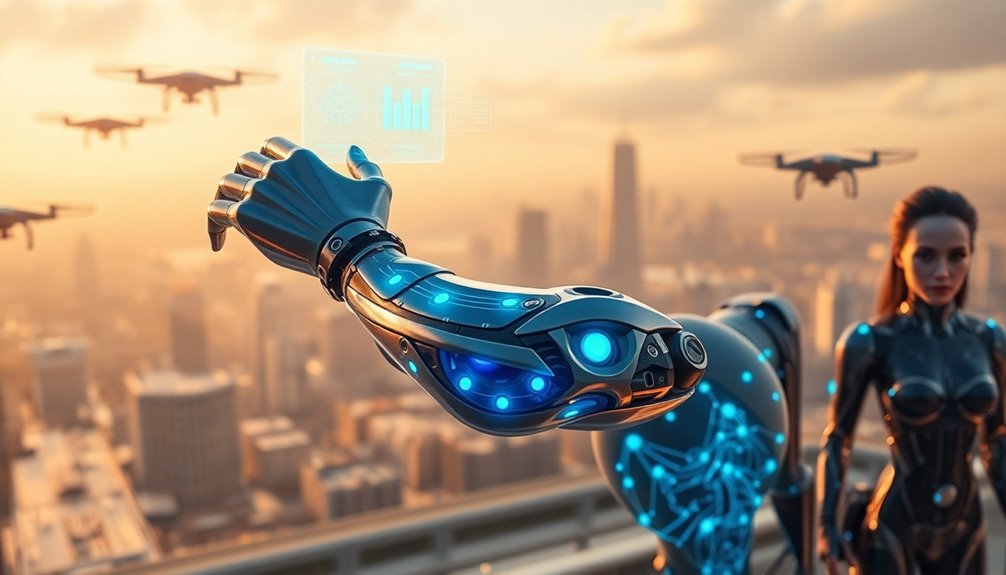
The future of human augmentation and cyborg technology promises significant advancements in both physical and cognitive improvement. Innovations like exoskeletons and brain-computer interfaces are set to redefine human capabilities, allowing individuals to overcome limitations and embrace new potentials. Yet, ethical concerns about access and inequality remain prevalent. As societal impacts unfold, comprehending these dynamics will be essential for shaping inclusive policies. There's much more to explore on how these technologies will transform lives and workplaces.
Article Highlights
- Future advancements in human augmentation will enhance physical and cognitive abilities, transforming how individuals interact with their environment and each other.
- Ethical frameworks will be essential to ensure equitable access to enhancements, preventing deepening economic disparities and safeguarding individual autonomy.
- The integration of augmented technologies into workplaces will redefine job dynamics, with a focus on employee well-being and collaborative human-robot interactions.
- Regulatory challenges must be navigated to keep pace with rapid advancements, ensuring safety, identity, and personal freedoms are protected in society.
- Continuous dialogue about the societal impacts of cyborg technologies is crucial for promoting inclusivity and addressing public concerns regarding identity and autonomy.
The Evolution of Human Augmentation
As technology advanced, human augmentation evolved from simple tools to sophisticated improvements that integrate seamlessly with the human body. Historical milestones like the invention of prosthetics marked the beginning of this voyage, showcasing humanity's desire to overcome limitations. Technological breakthroughs, such as the development of bio-compatible materials, paved the way for more integrated upgrades. These innovations not only restored function but additionally empowered individuals, allowing them to reclaim their freedom and independence. As society embraced these advancements, the conversation shifted from mere survival to thriving with improved capabilities. This evolution reflects a collective aspiration to push boundaries, redefine what it means to be human, and embrace the future without losing sight of individual autonomy and choice. Additionally, the integration of biotechnology and AI is expected to revolutionize healthcare, potentially enhancing the efficacy of human augmentation technologies.
Key Technologies Driving Cyborg Advancements
As advancements in cyborg technology continue to progress, two key areas stand out: neural interface innovations and biometric improvement devices. These technologies are reshaping the way humans interact with machines and their own biology. By integrating these tools, individuals can augment their capabilities and redefine the boundaries of human potential.
Neural Interface Innovations
As advancements in neural interface technologies have transformed the terrain of human augmentation, they in addition raise profound ethical and practical questions. Key innovations like brain-computer interfaces and neuroprosthetic devices enable direct communication between the brain and machines. Neural decoding advancements and digital brain mapping improve cognitive load management, whereas synaptic connectivity improvements support memory augmentation methods. Techniques such as neurofeedback training and cognitive enhancement techniques empower users to manipulate their neural circuitry, promoting deeper cognitive engagement. Moreover, the integration of these technologies into various sectors emphasizes the need for continuous skill development to ensure that individuals can effectively interact with and leverage these advancements.
| Technology | Purpose |
|---|---|
| Brain-Computer Interfaces | Direct brain-machine interaction |
| Neuroprosthetic Devices | Restore lost sensory/motor functions |
| Digital Brain Mapping | Visualize brain activity patterns |
| Memory Augmentation Methods | Improve recall and retention |
Biometric Enhancement Devices
The advancements in neural interface technologies pave the way for a new era of biometric improvement devices, which are becoming crucial in the evolution of cyborg technology. These devices not just improve personal freedom but also guarantee biometric security, allowing users to protect their identities and sensitive information effortlessly. Health monitoring capabilities embedded within these advancements empower individuals to take charge of their well-being, providing real-time insights into essential signs and overall health. As society embraces these innovations, the line between human and machine continues to blur, offering exciting possibilities for personal empowerment. The future of biometric enhancement devices promises to transform the way individuals interact with their bodies, improving both security and health in unprecedented ways. Additionally, the integration of wearable health trackers in these devices enhances the user experience by offering continuous monitoring and personalized health insights.
Enhancing Physical Abilities: The New Frontier
Whereas traditional methods of improving physical abilities have focused on training and nutrition, emerging technologies are now pushing the boundaries of human potential. Exoskeleton applications are revolutionizing how people interact with their environment, offering strength amplification that was once only a fantasy. These advanced devices can empower individuals to lift heavy objects effortlessly, improving not just physical prowess but also promoting independence and freedom. Envision a world where human limitations are redefined, allowing for greater participation in various activities, from manual labor to sports. With continued innovation, the integration of these technologies into everyday life represents a new frontier in human augmentation, paving the way for a future where personal improvement isn't just a dream but a reality everyone can embrace. Furthermore, the development of electric vehicles is paving the way for sustainable energy solutions that could complement these augmentation technologies.
Cognitive Augmentation: Merging Mind and Machine
Whereas advancements in physical augmentation capture much attention, cognitive augmentation is quietly revolutionizing the way humans think and process information. This fusion of mind and machine offers unprecedented opportunities for personal and collective growth. With innovative cognitive improvement tools, individuals can expand their mental capacities and boost decision-making abilities. As mind machine integration becomes more sophisticated, the barriers between human cognition and technology blur, empowering people to access vast knowledge and improve creativity. This evolution not only nurtures intellectual freedom but also encourages a more interconnected society. Embracing cognitive augmentation means embracing a future where individuals can tap into their full potential, ultimately leading to a world where thoughts transcend limitations and innovation flourishes. Additionally, the use of machine learning for personalized wellness can enhance cognitive capabilities by tailoring mental exercises to individual needs.
Ethical Considerations in Cyborg Development
As cyborg technology advances, ethical considerations around consent and autonomy become increasingly important. There's a growing concern that societal impacts could exacerbate existing inequalities, creating a divide between those who can afford improvements and those who cannot. Addressing these issues is vital for ensuring a fair and just integration of technology into human life.
Consent and Autonomy Issues
Although the potential benefits of cyborg technology are vast, the ethical implications surrounding consent and autonomy raise significant concerns. The establishment of robust consent frameworks is vital to navigate autonomy dilemmas, ensuring individuals retain personal agency in their choices. Nevertheless, the interplay of technological dependence may blur ethical boundaries, making informed consent more complex. As users grapple with the allure of improvements, they might unknowingly surrender their autonomy to influence dynamics inherent in cyborg development. The social implications of these technologies necessitate a careful examination of how consent is understood and respected. In the end, safeguarding autonomy in this evolving environment is fundamental to preserve individual freedoms and prevent exploitation in the rush for technological advancement.
Societal Impact and Inequality
Whereas cyborg technology offers transformative possibilities, its societal impact raises pressing concerns about inequality. The potential for improved privilege creates a technological divide, exacerbating existing wealth inequality and social stratification. Access disparities emerge as those in marginalized communities face barriers to equitable access, leaving them further behind in a swiftly evolving world. Ethical frameworks must address these global implications, ensuring that the benefits of cyborg advancements don't solely enrich the affluent. The digital divide threatens to deepen, as individuals without resources may be denied opportunities for augmentation. As society navigates this complex environment, it's essential to advocate for inclusivity, aiming for a future where all individuals can participate in and benefit from technological progress without discrimination.
Societal Impacts of Human Enhancement
As the promise of human improvement technologies captivates many, their societal impacts can be profound and far-reaching. The quest for social acceptance raises questions about cultural implications and ethical dilemmas surrounding identity transformation. Economic disparities may deepen as access to improvements isn't equal, leading to a technological divide that could fracture communities. Psychological effects will emerge, as individuals grapple with their improved selves and the public perception of what it means to be human. Accessibility challenges might hinder some from benefiting, igniting debates about fairness and inclusion. In the end, community adaptation is crucial for embracing these changes, ensuring that advancements in human augmentation promote freedom and equality rather than exacerbate existing inequalities.
The Future of Work and Augmented Humans
The integration of human augmentation technologies into the workplace is set to redefine the nature of work itself. With the rise of a remote workforce, augmented reality will improve collaboration, allowing for seamless human-machine teamwork. Collaborative robots will assist employees, leading to significant productivity boosts as they prioritize workplace safety. Nevertheless, the potential for job displacement looms, emphasizing the need for skill improvement and adaptive learning. Employees must adapt to new roles that leverage their augmented capabilities, nurturing a culture of continuous growth. By focusing on employee well-being, organizations can create environments where augmented humans thrive, ensuring that technology liberates rather than confines. The future of work promises a harmonious blend of human creativity and machine efficiency, revealing unprecedented possibilities.
Navigating the Regulatory Landscape for Cyborg Technology
Steering through the regulatory landscape for cyborg technology presents significant challenges, especially as advancements in human augmentation outpace existing legal frameworks. Innovators face compliance challenges that hinder progress, as they maneuver through safety standards and approval processes that often seem outdated. Legal implications of integrating these technologies into society raise questions about personal freedoms and rights. International regulations vary widely, complicating efforts to create a unified approach. Ethical guidelines must evolve alongside technology to address public perceptions and concerns about identity and autonomy. As society grapples with these shifts, it's essential to strike a balance between innovation and regulation, ensuring that the pursuit of improvement doesn't come at the cost of individual liberties and societal values.
Frequently Asked Questions
What Are the Potential Costs of Human Augmentation Technologies?
In a hypothetical scenario, a company develops an advanced neural implant to improve cognitive abilities. The financial implications of such technology could be staggering, with costs running into the millions for development and individual access. Furthermore, ethical considerations arise, as questions about inequality and consent become paramount. If only the wealthy can afford enhancements, society risks deepening existing divides, eventually challenging the very notion of freedom and equal opportunity for all.
How Do Cyborg Enhancements Affect Personal Identity and Self-Perception?
Cyborg enhancements considerably influence personal identity and self-perception. As individuals adopt these technologies, they often experience identity transformation, reshaping how they view themselves and their place in the world. Self-perception shifts can lead to a sense of empowerment or, conversely, feelings of alienation. Embracing these changes can offer a newfound freedom, allowing individuals to redefine who they are, but it likewise raises questions about authenticity and what it truly means to be human.
What Industries Are Likely to Be Most Impacted by Cyborg Technology?
Cyborg technology's impact spans several industries. In healthcare advancements, it could transform patient care. Military applications might improve soldiers' capabilities, whereas entertainment innovations could redefine immersive experiences. Education improvements may personalize learning, and manufacturing efficiency could skyrocket with robotic integration. Sports performance could similarly benefit, offering athletes unprecedented training tools. As these sectors evolve, society's desire for freedom and improvement will likely drive the adoption of cyborg technology, nurturing new opportunities and challenges.
Can Human Augmentation Lead to Physical or Mental Health Issues?
"Every rose has its thorn," and human augmentation's allure hides potential pitfalls. As advancements can improve capabilities, they may likewise lead to psychological effects, impacting mental health. Users might face identity crises or societal pressures, raising ethical implications about autonomy and consent. As individuals seek freedom through enhancement, it's essential to reflect on the balance between benefits and risks, ensuring that the pursuit of improvement doesn't compromise their well-being or humanity.
How Will Augmented Humans Interact With Non-Augmented Individuals Socially?
In exploring how augmented humans interact socially with non-augmented individuals, one can see shifts in social dynamics. Augmented individuals might face communication barriers, as their improved abilities can create misunderstandings. Nevertheless, with a desire for freedom and connection, both groups could learn to bridge these gaps. It's crucial for society to promote comprehension and acceptance, ensuring that differences in augmentation don't hinder meaningful interactions or the richness of diverse experiences.