
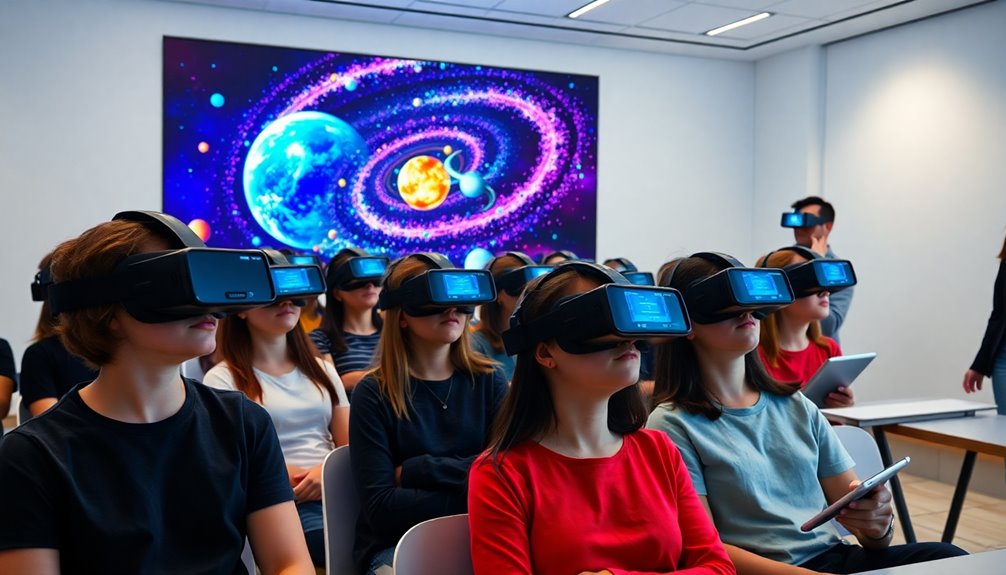
Virtual reality is revolutionizing various sectors beyond gaming. In healthcare, it's enhancing surgical training and therapy, helping manage anxiety and patient experiences. Education benefits from immersive learning and personalized instruction, in addition to real estate utilizing VR for remote property tours and virtual staging. Training simulations are developed for emergency responders and corporate environments to boost effectiveness. Marketing strategies likewise leverage VR to create engaging consumer connections. There's much more to explore in how VR shapes diverse industries.
Article Highlights
- Virtual reality enhances medical training by offering immersive simulations for surgical practice and emergency response scenarios.
- In education, VR provides interactive learning experiences, fostering engagement through gamified lessons and virtual classrooms.
- Real estate marketing utilizes VR for immersive property tours, allowing potential buyers to explore homes remotely and visualize spaces effectively.
- VR supports mental health treatment with tools for cognitive behavioral therapy, exposure therapy, and anxiety management in controlled environments.
- Corporate training programs leverage VR to create realistic simulations, boosting employee engagement and skill development across various industries.
Transforming Healthcare With Virtual Reality
As technology advances, virtual reality (VR) is revolutionizing healthcare in ways previously thought impossible. It's not just about entertainment; VR's immersive capabilities improve surgical training and facilitate medical simulations, allowing aspiring surgeons to practice in a risk-free environment. Patients benefit from virtual consultations that support chronic illness management and cognitive behavioral therapy, reducing anxiety and promoting stress relief. Rehabilitation programs leverage VR to create therapeutic environments that engage patients in physical therapy, as well as aiding pain management. In addition, empathy training through VR helps healthcare professionals understand patient experiences better, improving patient education. With immersive diagnostics and surgical planning, VR stands as a proof of the freedom technology offers in transforming healthcare for both practitioners and patients alike. Furthermore, the integration of VR into healthcare highlights the need for continuous skill development as professionals adapt to technological advancements in their field.
Enhancing Education Through Immersive Learning
Although traditional teaching methods have their place, immersive learning through virtual reality (VR) is reshaping education by engaging students in ways that textbooks alone can't achieve. VR allows for interactive simulations and virtual classrooms where learners can experience science exploration firsthand. This technology encourages experiential learning, enabling remote collaboration among students worldwide. With gamified education, lessons turn into exciting challenges, making knowledge retention easier. Personalized instruction meets individual needs, as historical recreations and cultural experiences transport students to different times and places. Language immersion becomes seamless, allowing for natural conversation practice. By embracing VR, educators can create a dynamic learning environment that empowers students, igniting their curiosity and promoting freedom in their educational expeditions. Additionally, AI-powered tools provide targeted feedback to enhance skill development, further enriching the educational experience.
Revolutionizing Real Estate Marketing
In today's real estate market, virtual reality is transforming how properties are showcased. With immersive property tours and innovative virtual staging solutions, agents can create engaging experiences that attract potential buyers. This technology not merely improves buyer engagement but additionally streamlines the sales process, making it more efficient for everyone involved. Furthermore, the integration of smart traffic management systems in urban planning can enhance accessibility to showcased properties, making it easier for potential buyers to visit homes.
Immersive Property Tours
With the rise of immersive technology, the real estate industry is undergoing a significant transformation through virtual reality property tours. These virtual open houses allow potential buyers to explore homes from the comfort of their own space, breaking down geographical barriers. Instead of simply browsing listings, clients can engage with interactive floorplans, visualizing how each room flows into the next. This freedom to roam through properties at their own pace empowers buyers, making the home-search process more enjoyable and efficient. Real estate agents are embracing this innovation, providing a unique selling point that sets them apart in a competitive market. Virtual reality isn't just a trend; it's reshaping how people buy and sell homes, offering unprecedented access and convenience. Additionally, drones generate high-resolution visuals to assist in urban planning, revealing intricate details of urban infrastructure for better insights.
Virtual Staging Solutions
Virtual staging solutions are transforming real estate marketing by allowing sellers to showcase properties in their best light without the high costs and time associated with traditional staging. With virtual design, realtors can create stunning, lifelike images that highlight a property's potential, giving buyers a clear vision of how they can make the space their own. This innovative approach to property visualization eliminates the need for physical furnishings and labor, freeing sellers from logistical headaches. As a result, properties can be marketed more effectively and attractively, appealing to a wider audience. Virtual staging not just improves the aesthetic appeal but also provides buyers the freedom to envision their future in the space, making it a game-changer in the real estate industry. Additionally, leveraging technology to track market trends is essential for maximizing the effectiveness of virtual staging strategies.
Enhanced Buyer Engagement
The introduction of virtual staging solutions has set the stage for an even more profound transformation in real estate marketing through improved buyer engagement. By integrating virtual events and interactive storytelling, agents can create immersive experiences that resonate with potential buyers. Instead of simply viewing listings, buyers can explore properties in a dynamic way, feeling as if they're walking through their future home. This shift empowers them to visualize their lives within these spaces, nurturing a deeper emotional connection. As technology evolves, real estate professionals utilize these tools to break free from traditional marketing methods, enhancing the buying experience. In the end, this innovative approach not only attracts attention but also cultivates lasting relationships, revolutionizing how people engage with real estate.
Virtual Reality in Tourism and Travel Experiences
As travelers seek new ways to experience the world, immersive technologies have transformed the tourism environment. Virtual reality offers stunning virtual tours and destination previews that let people explore far-off lands without leaving home. With interactive itineraries, they can plan trips that cater to their desires for adventure and cultural experiences. Historical reconstructions provide a glimpse into the past, allowing users to walk through ancient ruins or visit iconic landmarks in a fascinating way. These immersive adventures not only improve travel planning but also inspire scenic explorations, sparking a deeper connection to the destinations. By embracing VR, travelers can satisfy their wanderlust and experience the freedom of exploring the globe from their own space.
Training and Simulation in Various Professions
Immersive technologies have found applications beyond tourism, considerably enhancing training and simulation across various professions. Virtual reality's ability to create realistic environments makes it invaluable for firefighter training, military simulations, and aviation instruction. Emergency response teams benefit from realistic scenarios, whereas law enforcement training utilizes VR for tactical exercises. Surgical practice has seen a revolution, allowing for hands-on skill development without risk. Corporate training likewise employs these technologies, boosting employee engagement and effectiveness. Furthermore, construction safety and disaster preparedness training have improved, ensuring workers are better equipped for real-world challenges.
| Profession | Application |
|---|---|
| Firefighter Training | Realistic fire scenarios |
| Military Simulations | Tactical operation drills |
| Aviation Instruction | Flight simulations |
| Emergency Response | Crisis management drills |
| Law Enforcement Training | Scenario-based tactics |
Improving Mental Health and Therapy Practices
Though many associate virtual reality primarily with gaming, its potential in mental health and therapy practices is transforming the way professionals approach treatment. VR offers innovative solutions for anxiety management and emotional regulation, making it easier for individuals to engage in mindfulness practices. Through exposure therapy, clients can confront fears in safe, controlled environments, promoting stress relief and personal growth. Cognitive behavioral therapy can be improved with virtual support, allowing for immersive meditation sessions that encourage relaxation. In addition, VR facilitates social interaction, helping users connect with others in therapeutic environments. By embracing these advancements, therapists can create customized experiences that empower individuals on their path to improved mental well-being, ultimately encouraging a greater sense of freedom and autonomy in their lives.
Engaging Marketing Strategies With VR
Even though traditional marketing methods often struggle to capture consumer attention in a crowded marketplace, virtual reality (VR) offers a dynamic way to engage audiences. Brands are increasingly leveraging VR to create immersive experiences that go beyond mere advertising. By utilizing interactive advertisements, companies can draw potential customers into a virtual world where they can explore products in a compelling way. This not only improves consumer engagement but additionally nurtures a deeper emotional connection with the brand. VR allows marketers to break free from conventional boundaries, providing an avenue for creativity that resonates with consumers seeking genuine experiences. As brands embrace this technology, they're redefining how they communicate, ensuring their messages aren't just seen but truly felt.
Virtual Reality in Retail and Shopping Experiences
Virtual reality is transforming how consumers experience retail by offering immersive product showcases that bring items to life. With virtual try-on solutions, shoppers can visualize how products will look on them without ever leaving their homes. This innovative approach is reshaping the way people shop, making it more interactive and engaging.
Immersive Product Showcases
How can retailers improve the shopping experience in an increasingly digital world? By embracing immersive product showcases, they're redefining customer engagement. Virtual reality allows brands to create compelling product demonstrations within virtual showrooms, transporting customers into a domain of 3D visualization. These interactive displays not just capture attention but additionally elevate brand storytelling, making products come alive. Sensory marketing plays a vital role here, as it engages customers on multiple levels, nurturing a deeper connection to the brand. By offering immersive experiences, retailers empower shoppers to explore, interact, and in the end feel more confident in their purchasing decisions. This innovative approach not merely drives sales but also develops brand loyalty, transforming the retail environment into a dynamic experience.
Virtual Try-On Solutions
As consumers increasingly seek personalized shopping experiences, virtual try-on solutions are revolutionizing the way they interact with products. These innovative technologies allow shoppers to engage in virtual fitting sessions, trying on clothing or accessories from the comfort of their homes. By providing an immersive experience, retailers improve the customer experience, enabling individuals to visualize how items will look and fit without the hassle of physical trials. This freedom to explore styles and sizes encourages confident purchasing decisions, reducing returns and improving satisfaction. As virtual fitting becomes more sophisticated, it's clear that virtual try-on solutions are more than just a trend; they're shaping the future of retail, aligning with consumers' desires for convenience and personalization.
Creating Art and Design in a Virtual Space
As artists have long explored physical mediums, the emergence of virtual reality has opened up unprecedented avenues for creativity and design. They now utilize digital canvases to craft breathtaking immersive installations, inviting viewers to step inside their artistic expressions. Virtual galleries allow for the display of these creations in ways never before envisioned, enabling global audiences to experience art from anywhere. Collaborative creation thrives in this space, as artists engage in 3D modeling and develop interactive sculptures that respond to viewer interaction. Virtual exhibitions showcase augmented art, blending the real and digital worlds. Additionally, design prototyping benefits from VR, allowing designers to visualize and refine their concepts in a dynamic environment, ultimately broadening the horizons of creativity and innovation.
The Future of Virtual Reality in Everyday Life
As virtual reality technology continues to evolve, its applications in everyday life are becoming increasingly apparent. From enhancing education and training experiences to providing innovative healthcare solutions and immersive real estate tours, VR is set to transform various sectors. This shift not only promises to improve accessibility but as well to redefine how people interact with their environments.
Education and Training Applications
Virtual reality is revolutionizing education and training, offering immersive experiences that traditional methods can't match. With virtual classrooms, learners can engage in interactive simulations that encourage skill development in a safe environment. This technology improves vocational training, enabling participants to practice real-world scenarios without the risks. Educational accessibility advances as remote learning becomes more engaging through immersive storytelling and collaborative projects. Teacher training programs benefit, allowing educators to experience various classroom dynamics and refine their methods. By embracing experiential learning, institutions can create a more dynamic atmosphere that promotes creativity and critical thinking. As VR continues to evolve, it promises to reshape the educational environment, granting learners the freedom to explore and innovate like never before.
Healthcare and Therapy Solutions
Although many associate virtual reality primarily with gaming, its applications in healthcare and therapy are quickly growing, offering groundbreaking solutions for patient care and rehabilitation. Virtual reality therapy allows patients to engage in immersive rehabilitation experiences, enabling them to confront fears and manage pain in a controlled environment.
| Application | Benefits | Examples |
|---|---|---|
| Pain Management | Reduces anxiety and discomfort | Virtual environments for relaxation |
| PTSD Treatment | Helps process trauma | Simulated exposure therapy |
| Physical Rehabilitation | Improves motivation | Interactive exercise programs |
These innovative approaches not just improve treatment outcomes but empower patients to take control of their healing process, encouraging a sense of freedom and independence in their recovery.
Real Estate Virtual Tours
Real estate virtual tours are transforming the way buyers explore properties, offering an immersive experience that traditional listings simply can't match. With these tours, potential homeowners can navigate spaces at their own pace, enhancing their freedom in the decision-making process. By integrating real estate analytics, agents can tailor virtual experiences to specific buyer demographics, ensuring that each tour resonates with the right audience. This technology not only saves time for buyers and agents but also opens up a wider range of options without geographical constraints. As virtual reality continues to evolve, it's clear that real estate virtual tours will play an essential role in shaping how individuals envision their future homes, making the buying expedition more accessible and engaging than ever before.
Frequently Asked Questions
What Hardware Is Required for Effective Virtual Reality Experiences?
Did you know that over 80% of VR users believe it improves their experience? For effective virtual reality experiences, one needs quality VR headsets that deliver high-resolution visuals and immersive audio. Furthermore, motion tracking technology is essential, allowing users to interact naturally within the virtual environment. With the right hardware, individuals can explore vast digital terrains, making every adventure feel real and liberating. It's all about creating an unforgettable experience.
How Can Businesses Implement Virtual Reality Technology?
Businesses can implement virtual reality technology by utilizing it for employee training and enhancing customer engagement. They've found VR creates immersive learning experiences, allowing employees to practice skills in realistic environments without real-world consequences. Simultaneously, companies can engage customers through virtual showrooms or interactive product demonstrations, nurturing a deeper connection with their brand. By embracing VR, businesses can innovate their approach, creating freedom for employees and customers to explore and learn.
Are There Risks Associated With Using Virtual Reality?
As a bird may soar too high and risk exhaustion, virtual reality users face their own set of risks. There're physical risks, like motion sickness or eye strain, that can arise from prolonged use. Furthermore, the psychological effects can lead to disorientation or addiction, blurring the lines between reality and the virtual world. It's essential for users to remain aware of these potential pitfalls, balancing their desire for freedom with caution.
What Are the Costs Involved in Developing VR Content?
In regards to developing VR content, the costs can vary widely. A developer's budget often depends on the complexity of the project and the quality of graphics desired. Basic content creation might require a modest investment, whereas high-end experiences can lead to substantial development budgets. They'll additionally need to account for software licenses, hardware, and skilled personnel, making careful financial planning crucial for anyone looking to explore this immersive medium.
How Does Virtual Reality Impact User Privacy and Data Security?
In a world where freedom thrives, VR's impact on user privacy raises concerns. Data tracking, lurking in the shadows, collects personal information, often without users' consent. It's a double-edged sword; as VR offers immersive experiences, it can compromise individual privacy. Users must navigate a terrain where their actions and preferences are monitored. Yet, with awareness and proper consent practices, they can reclaim control, ensuring their virtual travels remain their own.