
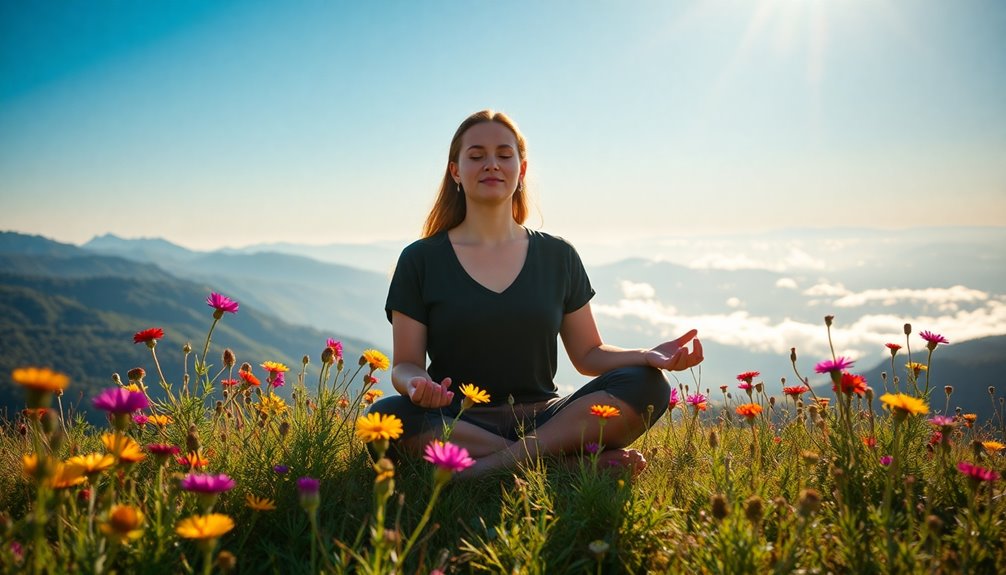
Meditation can greatly improve your mental well-being, helping you achieve a calmer and healthier mind. By practicing mindfulness, you can reduce stress and anxiety as you cultivate emotional resilience. You'll find that improved focus and concentration naturally come with regular meditation, boosting your creativity and problem-solving skills. As you embrace each moment, you'll nurture a deeper connection to yourself and others. Continue to explore more about the diverse techniques and their transformative benefits for your life.
Article Highlights
- Meditation reduces stress and anxiety by promoting mindfulness and focusing on the present moment, leading to a calmer state of mind.
- Regular practice enhances emotional resilience, allowing individuals to better manage mood swings and bounce back from setbacks.
- Improved concentration and focus through meditation contribute to clearer thinking and increased productivity in daily tasks.
- Meditation fosters emotional intelligence, encouraging compassionate interactions and better relationships with others.
- Overall, meditation supports mental health by providing a refuge from chaos, promoting intentional living and a deeper connection to oneself.
Understanding Meditation: A Brief Overview
Meditation is like a mental workout that helps you find peace and clarity amid life's chaos. By exploring various meditation techniques, you can improve your ability to serve others with compassion and insight. The history of meditation spans thousands of years, originating in ancient cultures as a spiritual practice. Over time, it evolved into diverse forms, each offering unique benefits. Whether you choose mindfulness, loving-kindness, or transcendental meditation, these practices deepen your connection to yourself and the world around you. As you cultivate inner stillness, you'll find that your capacity to help others expands, allowing you to approach challenges with a calm and open heart. Embracing meditation can transform not just your life but likewise the lives of those you touch.
Reducing Stress and Anxiety
In terms of reducing stress and anxiety, mindfulness techniques can be game-changers for you. These practices not just help you stay present but additionally offer long-term benefits that can transform your mental well-being. Let's explore how these techniques work and what lasting impacts they can have on your life.
Mindfulness Techniques Overview
Though many techniques exist, mindfulness practices stand out for their effectiveness in reducing stress and anxiety. By focusing your attention on the present moment, you can cultivate a sense of calm that benefits both you and those around you. Various meditation styles, such as body scans and breath awareness, can help ground you in the here and now. These practices encourage you to observe your thoughts without judgment, allowing you to promote compassion for yourself and others. As you integrate mindfulness into your daily routine, you'll likely find it easier to navigate life's challenges, leading to a more supportive environment for everyone. Embracing these techniques not only improves your well-being but additionally empowers you to uplift others. Mindfulness can be effectively integrated into daily routines to enhance self-discovery and promote overall well-being.
Long-term Benefits Explained
As you commit to regular meditation practice, you'll likely notice significant long-term reductions in stress and anxiety levels. By nurturing long-term resilience, meditation helps you develop a calmer state of mind, enabling you to serve others more effectively. Here are some key benefits you can expect:
- Enhanced emotional regulation – You'll respond to stress with increased composure.
- Improved focus – Sustained mindfulness sharpens your attention, allowing you to be present for those in need.
- Greater empathy – A clearer mind nurtures deeper connections with others.
- Lower cortisol levels – Regular practice helps mitigate the physical effects of stress on your body.
With dedication, you’ll cultivate a peaceful mindset that not only benefits you but additionally those around you. As you embrace this mindful approach, you’ll find that your relationships flourish and your overall well-being improves. Just as you would consider a smart investment in rental properties, recognizing the value of nurturing your inner peace is equally essential. The positive energy you radiate can inspire others to seek their own tranquility, creating a ripple effect of harmony in your community.
Enhancing Emotional Well-Being
Meditation offers a strong tool for improving emotional well-being, allowing you to cultivate a greater sense of inner peace and resilience. By practicing regularly, you can enhance your emotional resilience and achieve better mood regulation, which benefits not just you but those around you.
| Benefit | Description | Impact on Others |
|---|---|---|
| Emotional Resilience | Ability to bounce back from setbacks | Supports those in need |
| Mood Regulation | Stabilizes emotional highs and lows | Creates a positive environment |
| Inner Peace | Reduces stress and anxiety | Encourages compassion and kindness |
Embracing meditation can help you serve others more effectively, as a calm mind improves your capacity for empathy and support. Additionally, incorporating techniques like emotional soundscapes can further enhance your meditation experience, promoting deeper relaxation and emotional clarity.
Improving Focus and Concentration
When you find yourself struggling to maintain focus in a world filled with distractions, incorporating meditation into your routine can be a transformative experience. By practicing meditation regularly, you can improve your ability to concentrate and serve others more effectively. Here are some focus techniques and concentration exercises to reflect on:
- Mindful Breathing: Focus on your breath for a few minutes to clear your mind.
- Body Scan: Pay attention to different body parts, promoting awareness and grounding.
- Visualization: envision a peaceful scene, helping to center your thoughts.
- Guided Meditations: Use apps or recordings to lead you through specific focus-boosting exercises.
These simple yet impactful practices can sharpen your focus, allowing you to better support those around you.
Promoting Better Sleep
If you're finding it hard to drift off at night, integrating meditation into your evening routine can be a transformative element for your sleep quality. By incorporating relaxation techniques, you can not just calm your mind but also improve your sleep hygiene. Simple practices like mindful breathing or guided imagery can help ease the stress of the day, making it easier to shift into a restful state. As you focus on your breath, you'll find that racing thoughts begin to fade, allowing you to embrace tranquility. This change in mindset not only promotes better sleep but also prepares you to serve others with renewed energy and compassion. In the end, a well-rested mind is better equipped to engage meaningfully in the world around you.
Boosting Creativity and Problem Solving
Though you might not realize it, taking a few moments to meditate can greatly improve your creativity and problem-solving skills. By engaging in meditation, you can utilize the strength of creative visualization and divergent thinking, allowing your mind to explore new ideas and solutions. Here are some ways meditation can benefit your creative process:
- Enhances Focus: Meditation helps you concentrate, making it easier to brainstorm and develop innovative concepts.
- Encourages Open-Mindedness: It promotes a willingness to explore diverse perspectives, essential for effective problem-solving.
- Reduces Stress: A calmer mind allows for clearer thinking, helping you tackle challenges without feeling overwhelmed.
- Stimulates Imagination: Regular practice can reveal your potential for creative insights, leading to breakthrough ideas.
Fostering Self-Awareness and Mindfulness
When you practice meditation, you're not just finding peace; you're additionally enhancing your emotional intelligence. By cultivating present moment awareness, you gain insights into your thoughts and feelings. This self-awareness can lead to better decision-making and stronger relationships.
Enhancing Emotional Intelligence
As you explore meditation, you'll discover its profound impact on improving emotional intelligence, particularly in nurturing self-awareness and mindfulness. By engaging in regular meditation practice, you'll cultivate crucial skills that lead to greater emotional regulation and empathy development. Here are some ways meditation can help:
- Increased Self-Awareness: You'll gain clarity about your thoughts and feelings, enabling you to comprehend yourself better.
- Improved Emotional Regulation: Meditation helps you manage your emotions, allowing for thoughtful responses instead of impulsive reactions.
- Empathy Development: You'll learn to connect with others' emotions, promoting compassion and insight.
- Mindfulness Practice: Staying present boosts your ability to respond to others with kindness and patience. Additionally, enhancing your emotional intelligence through meditation can be particularly beneficial in adapting to the changing employment landscape where soft skills are increasingly valued.
Cultivating Present Moment Awareness
Cultivating present moment awareness is vital for nurturing self-awareness and mindfulness, since it allows you to fully engage with your thoughts and feelings without judgment. By practicing mindful breathing, you can create a space where you can truly connect with yourself. This connection promotes a deeper comprehension of your emotions, enabling you to respond to others with compassion and empathy. When you focus on present awareness, you shift your attention away from distractions, allowing you to serve others more effectively. Embrace each moment, recognizing the beauty in the ordinary. As you cultivate this awareness, you'll not just improve your own well-being but also inspire those around you to live with intention and grace.
Supporting Overall Mental Health
Meditation can greatly improve your overall mental health by providing a calming refuge from the chaos of daily life. By incorporating various meditation techniques into your routine, you can boost your mental clarity and emotional stability. Here are four key benefits:
- Stress Reduction: Regular practice helps reduce anxiety and promotes a sense of peace.
- Enhanced Focus: Meditation sharpens your concentration, allowing you to serve others more effectively.
- Emotional Resilience: It cultivates a balanced emotional state, helping you navigate challenges with grace.
- Improved Self-Awareness: By tuning into your thoughts and feelings, you become more attuned to the needs of others.
Embracing meditation not only nurtures your mental health but likewise empowers you to contribute positively to the world around you.
Frequently Asked Questions
How Long Should I Meditate Each Day for Best Results?
To get the best results from meditation, aim for a daily duration of at least 10 to 20 minutes. Consistency is key, so try to practice daily or several times a week. You'll find that meditation frequency helps deepen your experience and connection with yourself. As you grow more comfortable, you can gradually increase your time. Remember, it's about serving yourself to better serve others in your life.
Can Meditation Help With Physical Health Issues?
Yes, meditation can definitely help with physical health issues. By practicing meditation regularly, you can experience various meditation benefits, such as reduced stress and improved immune function. It's known to lower blood pressure and alleviate chronic pain, as well. When you focus on your breath and let go of tension, you're not just calming your mind; you're additionally promoting healing in your body. So, consider incorporating meditation into your routine for the sake of your health and those you serve.
Do I Need Special Equipment to Meditate?
They say, "Less is more," and that couldn't be truer regarding meditation. You don't need special equipment to start your expedition; just a quiet space and a willingness to explore various meditation techniques. Mindfulness practices can be done anywhere, whether sitting on the floor or in a chair. By focusing on your breath or surroundings, you can cultivate a sense of calm and clarity, ready to serve others with a full heart.
Is Meditation Suitable for Children and Teens?
Absolutely, meditation's suitable for children and teens! It's a great way for them to learn mindfulness techniques and improve emotional regulation. By introducing meditation early, you're helping them develop skills to manage stress and enhance focus. Plus, it's a wonderful opportunity to bond as they explore these practices together. Just keep it fun and engaging, and they'll likely embrace it as a beneficial part of their daily routine.
What Are the Different Types of Meditation Practices?
Envision your mind as a vast ocean, calm and clear. There are various types of meditation practices to explore. You might find mindfulness techniques helpful, allowing you to anchor yourself in the present. Guided imagery can transport you to serene vistas, nurturing compassion for yourself and others. Each practice serves as a tool, guiding you to cultivate peace and awareness, not just within yourself, but in the world around you. Embrace these paths!