
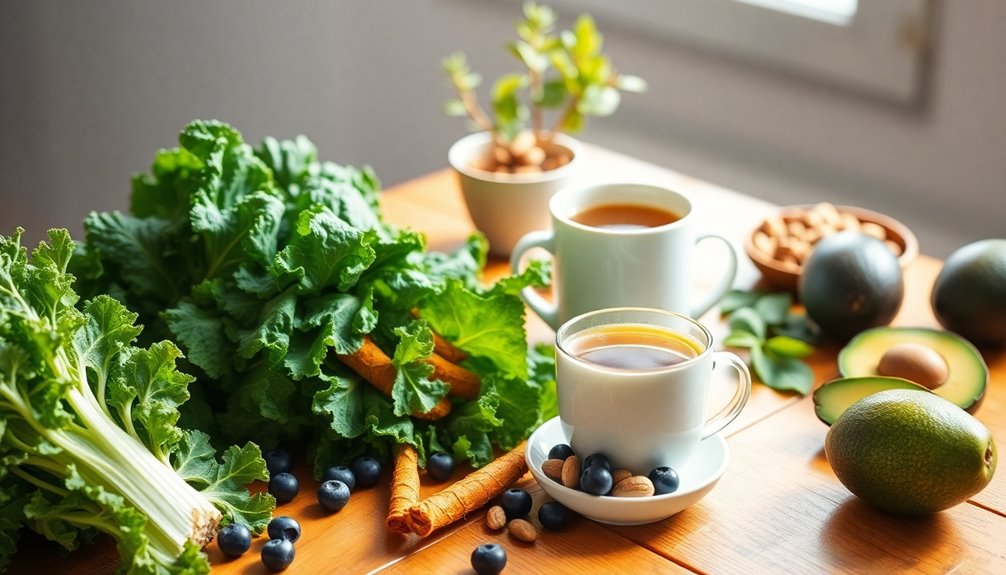
To reduce inflammation naturally, focus on an anti-inflammatory diet. Incorporate colorful fruits and vegetables, fatty fish, and healthy fats like olive oil. Avoid processed sugars, trans fats, and excessive salt. Regular exercise, even low-intensity activities, can additionally help, along with maintaining good sleep hygiene. Managing stress through techniques like meditation can lower inflammation too. There's much more to explore about creating a thorough anti-inflammatory lifestyle plan that can improve your well-being.
Article Highlights
- Incorporate anti-inflammatory foods like fruits, vegetables, fatty fish, and healthy fats into your daily diet to combat inflammation.
- Avoid processed sugars, trans fats, refined grains, and dairy products, which can exacerbate inflammation levels in the body.
- Engage in regular physical activity, such as walking or cycling, to lower stress hormones and promote the release of anti-inflammatory compounds.
- Prioritize good sleep hygiene to maintain consistent circadian rhythms and reduce inflammation; aim for restorative sleep each night.
- Integrate mindful practices like meditation and yoga to enhance emotional well-being and resilience, contributing to overall inflammation reduction.
Understanding Inflammation: What You Need to Know
Inflammation, as it is often misinterpreted, is your body's natural response to injury or infection. It's crucial to recognize that there are two types: acute and chronic. Acute inflammation symptoms, like redness and swelling, appear quickly as your body works to heal. Nevertheless, chronic inflammation can be more insidious, often stemming from factors like stress, poor diet, or lack of exercise. Comprehending chronic inflammation causes can empower you to help others by identifying triggers in their lives. By promoting awareness, you can encourage healthier habits and nurture healing within your community. Remember, your body's response is a call to action, and by grasping inflammation, you can better support yourself and those around you in their paths to wellness.
The Role of Diet in Inflammation Management
In terms of managing inflammation, your diet plays an essential role. Incorporating anti-inflammatory foods can help reduce symptoms, whereas avoiding certain foods can make a big difference. Let's explore what you should eat and what to steer clear of for better health.
Anti-Inflammatory Foods
A well-chosen diet can be a strong ally in managing inflammation. Incorporating anti-inflammatory foods not only benefits you but likewise those you care for. Here are three key components to include in your meals:
- Herbs and Spices: Turmeric, ginger, and garlic are mighty allies. They're rich in antioxidants and can help reduce inflammation.
- Fatty Fish: Salmon, mackerel, and sardines provide omega-3 fatty acids that combat inflammation and promote heart health.
- Superfood Smoothies: Blend leafy greens, berries, and chia seeds for a nutrient-packed drink that boosts your body's defenses. Additionally, incorporating anti-inflammatory compounds from a plant-based diet can significantly enhance your overall health and reduce chronic inflammation.
Foods to Avoid
Incorporating anti-inflammatory foods into your diet can be beneficial; it's just as important to be mindful of what to avoid. Certain foods can exacerbate inflammation, and steering clear of them can help you serve your health better.
| Foods to Avoid | Reasons to Avoid | Healthier Alternatives |
|---|---|---|
| Processed Sugars | Increase inflammation | Fresh fruits |
| Trans Fats | Promote chronic diseases | Healthy fats (olive oil) |
| Fried Foods | High in unhealthy fats | Baked or grilled options |
| Excessive Salt | Can lead to hypertension | Herbs and spices |
Dairy products, red meats, refined grains, alcohol consumption, and even nightshade vegetables may likewise trigger inflammatory responses. By consciously avoiding these, you can better support your body's health.
Anti-Inflammatory Foods to Include in Your Diet
To reduce inflammation, you might want to focus on incorporating more fruits and vegetables into your meals. These foods are packed with antioxidants and nutrients that can help combat inflammation. Furthermore, healthy fats, like those found in olive oil and avocados, can likewise play a key role in your anti-inflammatory diet.
Fruits and Vegetables
Eating a variety of colorful fruits and vegetables can greatly reduce inflammation in your body. By choosing seasonal produce, you not just support local farmers but additionally maximize the nutritional benefits. Here are three anti-inflammatory options to include in your diet:
- Berries: Rich in antioxidants, they help combat oxidative stress and inflammation.
- Leafy Greens: Spinach, kale, and collard greens are loaded with vitamins and minerals that promote healing.
- Cruciferous Vegetables: Broccoli, cauliflower, and Brussels sprouts contain compounds that actively reduce inflammation.
Incorporating these colorful varieties into your meals not only nourishes you but also improves the health of those you serve. Make it a point to share these lively, health-boosting options with family and friends!
Healthy Fats
Healthy fats play a crucial role in reducing inflammation and supporting overall health. Including omega 3 sources and monounsaturated oils in your diet can make a big difference. These fats help fight inflammation and promote heart health, benefiting both you and those you care for.
Here's a quick reference to some healthy fat options:
| Healthy Fats | Benefits |
|---|---|
| Avocado | Rich in monounsaturated oils |
| Olive oil | Anti-inflammatory properties |
| Fatty fish (salmon) | High in omega 3 sources |
| Nuts (almonds, walnuts) | Supports heart health |
| Chia seeds | Omega 3 and fiber source |
Incorporating these foods into your meals can improve your well-being and encourage a healthier lifestyle for everyone around you.
Foods to Avoid for Reducing Inflammation
While many foods can promote better health, some can actually exacerbate inflammation in your body. To help you serve others better, it's important to be mindful of what to avoid. Here are three key categories of foods that can lead to increased inflammation:
- Processed Sugars and Artificial Additives: These can spike your blood sugar and lead to inflammation.
- Trans Fats and Inflammatory Oils: Found in fried foods and some margarine, these fats can trigger inflammatory responses.
- Refined Grains and Excessive Salt: Often present in packaged foods, they can contribute to chronic inflammation.
Additionally, limit red meat, dairy products, and alcohol consumption for overall well-being. Making these mindful choices can help you nurture a healthier environment for yourself and those around you.
The Importance of Regular Physical Activity
Regular physical activity plays a crucial role in maintaining overall health and reducing inflammation. When you engage in regular exercise, you're not just benefiting yourself; you're likewise setting an example for others. The exercise benefits are profound, as it helps regulate your immune system, lowers stress hormones, and promotes the release of anti-inflammatory compounds. By incorporating physical activity into your routine, you can improve your well-being and encourage those around you to do the same. Whether it's walking, cycling, or dancing, every bit counts. Remember, you don't need to be extreme; consistency is key. By prioritizing movement, you cultivate an environment of health and wellness, making a positive impact on your life and the lives of those you care about.
Stress Management Techniques for Lowering Inflammation
Managing stress effectively is vital for reducing inflammation in your body. By incorporating practical techniques, you can cultivate a more peaceful mindset. Here are three stress management strategies to contemplate:
- Mindfulness Practices: Engage in meditation or yoga to center your thoughts and embrace the present moment. Experience the yoga benefits to improve both body and mind.
- Breathing Exercises: Use deep breathing techniques to calm your nervous system and reduce stress response.
- Journaling Techniques: Implement gratitude journaling or creative outlets to express your feelings and reflect on positive experiences, strengthening social connections.
Additionally, don't underestimate the influence of nature walks and effective time management to create a balanced lifestyle. Embrace these strategies to nurture your well-being and lower inflammation naturally.
The Benefits of Sleep for Inflammation Reduction
Getting enough quality sleep is a strong way to combat inflammation and improve overall health. Prioritizing sleep duration and sleep quality can improve your immune response and hormonal balance, helping to break the inflammation link. Good sleep hygiene, like maintaining consistent circadian rhythms, guarantees you enter those restorative phases crucial for recovery benefits. When you experience sleep deprivation, your body reacts negatively, increasing inflammation and hindering healing. By comprehending the importance of sleep, you not just support your own health but can inspire others to follow suit. Encourage those around you to adopt healthy sleep habits, cultivating an environment where everyone thrives and reduces inflammation together. Embrace the strength of sleep for a healthier, more lively life.
Creating an Anti-Inflammatory Lifestyle Plan
Although inflammation can be a persistent challenge, creating an anti-inflammatory lifestyle plan can greatly improve your overall well-being. By adopting specific meal planning and lifestyle habits, you can effectively reduce inflammation while inspiring those around you. Here are three key steps to take into account:
- Nutrient-Rich Meals: Focus on incorporating anti-inflammatory foods like leafy greens, berries, and fatty fish into your meal planning.
- Regular Exercise: Engage in moderate physical activity, which can boost circulation and reduce inflammatory markers.
- Mindful Practices: Integrate stress-reducing techniques such as meditation or yoga to promote emotional well-being.
Frequently Asked Questions
Can Supplements Help Reduce Inflammation Naturally?
You might wonder if supplements can truly help reduce inflammation naturally. The truth is, certain supplement types like omega-3 fatty acids, curcumin, and ginger have shown promise in studies. Nevertheless, it's vital to follow dosage recommendations to avoid any adverse effects. Consulting with a healthcare professional guarantees you're on the right track. By being informed, you're not just helping yourself but likewise empowering others to explore natural solutions for inflammation.
How Long Does It Take to See Results From Anti-Inflammatory Changes?
You might notice changes within a few weeks of making dietary adjustments to reduce inflammation. The anti-inflammatory timeline varies for everyone, but consistency is key. As you incorporate more whole foods and eliminate processed items, your body can begin to heal. It's important to be patient and assess how you're feeling. Sharing your path with others can inspire them to make similar changes, nurturing a supportive community focused on well-being.
Are There Specific Cooking Methods That Reduce Inflammation in Foods?
You know that moment when you realize your cooking methods can make a difference? Well, they really can! Steaming vegetables retains their nutrients and reduces inflammation, making them a fantastic choice for healthy meals. Grilling fish not just improves flavor but likewise preserves omega-3 fatty acids, which are great for fighting inflammation. By using these methods, you'll not just serve delicious dishes but likewise promote well-being for yourself and those you care about.
Is Intermittent Fasting Effective for Reducing Inflammation?
Intermittent fasting can be effective for inflammation reduction. By giving your body a break from constant eating, you allow it to repair and regenerate, which may help lower inflammation levels. Many people find that this approach not just improves their overall health but additionally boosts their ability to serve others, as they feel more energized and focused. So, if you're considering intermittent fasting, it could be a valuable tool in your wellness expedition.
Can Emotional Health Impact Inflammation Levels in the Body?
Did you know that chronic stress can increase inflammation by up to 50%? It's essential to recognize how your emotional health plays a role in inflammation levels. By focusing on stress management and mood regulation, you can help reduce inflammation in your body. When you prioritize your emotional well-being, you're not just benefiting yourself, but you're likewise better equipped to serve others. So, take time to nurture your mental health—it's important for everyone.