
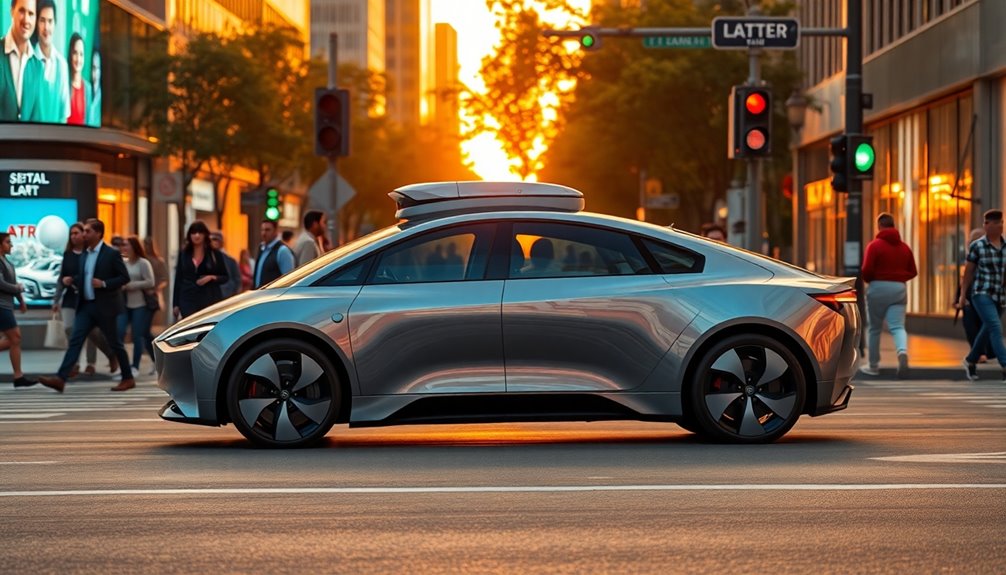
Self-driving cars are closer to reality than many think because of rapid advancements in technology and substantial investments by major automotive players like Tesla and Ford. Improved sensor integration and machine learning have refined navigation and safety. Public perception is shifting, with younger generations more open to this innovation. As regulatory frameworks evolve and infrastructure adapts, acceptance grows. There's much to explore regarding the transformative potential of autonomous vehicles and what it means for the future of transportation.
Article Highlights
- Significant advancements in sensor technology and machine learning have enhanced navigation and safety in autonomous vehicles.
- Major automotive manufacturers like Tesla and Ford are heavily investing in self-driving technology, accelerating development and deployment.
- Improved accident statistics demonstrate the potential for autonomous vehicles to reduce human error-related incidents.
- Emerging regulatory frameworks are being established to ensure safety standards and address liability issues in self-driving technology.
- Growing public acceptance, especially among younger generations, indicates a readiness for the integration of self-driving cars into everyday life.
The Evolution of Autonomous Vehicle Technology
As technology has advanced, the evolution of autonomous vehicles has transformed from theoretical concepts into practical applications. Today's self-driving cars rely on sensor fusion, integrating data from cameras, radar, and lidar to navigate complex environments. This technological synergy improves safety and efficiency, offering a glimpse of a future where individuals can reclaim their time, enjoying a sense of freedom during travel. Nevertheless, the rise of these vehicles isn't without challenges. Ethical dilemmas arise, such as decision-making in accident scenarios. These considerations highlight the importance of balancing innovation with moral responsibility. As society moves forward, addressing these issues will shape the road ahead, ensuring that autonomous vehicles not only improve mobility but also align with the values of freedom and safety that many cherish. Furthermore, the integration of smart traffic management systems can enhance the overall efficiency of autonomous vehicles on our roads.
Key Players in the Self-Driving Industry
In the swiftly evolving self-driving industry, major automotive manufacturers and tech giants are leading the charge. These players are not just investing heavily in research and development but are likewise pushing the boundaries of innovation in autonomous technology. As they collaborate and compete, their advancements will shape the future of transportation.
Major Automotive Manufacturers
As various companies are exploring the potential of self-driving technology, several major automotive manufacturers have emerged as key players in the industry. These manufacturers are forming automotive partnerships to combine resources and expertise, driving innovation at an unprecedented pace. Companies like Tesla, Ford, and General Motors have invested heavily in research and development, creating innovative designs that push the boundaries of what's possible. Their commitment to safety, efficiency, and user experience reflects a vision of freedom in transportation, where self-driving cars can liberate people from the burdens of traditional driving. With their focus on utilizing state-of-the-art technology, these manufacturers are not just competitors; they're pioneers, shaping a future where autonomy and mobility coexist seamlessly. As the integration of AI-driven job creation progresses, the automotive industry will also witness the emergence of new roles requiring specialized skills in automation and technology.
Tech Giants' Innovations
A host of tech giants are making significant strides in the self-driving industry, leveraging their expertise in artificial intelligence, data analysis, and advanced computing. Their innovations are reshaping the terrain, driven by fierce industry competition and strategic innovation partnerships. Key developments include:
- Advanced AI algorithms enhancing decision-making and safety
- Significant tech investments to accelerate research and development
- Regular software updates improving user experience and vehicle performance
- Increased focus on data privacy to build consumer trust
As these companies navigate shifting market trends, they're not just racing toward autonomous vehicles; they're crafting a future where freedom and mobility intertwine, ensuring that the expedition is as enriching as the destination. Furthermore, the evolution of intelligent transportation systems will play a critical role in integrating self-driving cars into urban environments.
Advances in Sensors and Machine Learning
Recent innovations in sensors and machine learning are transforming the terrain of self-driving cars. The integration of sensor fusion technology allows vehicles to gather and interpret vast amounts of data from various sensors, creating a cohesive comprehension of their environment. This synergy improves safety and efficiency, enabling cars to navigate complex situations with ease. Machine learning advancements further empower these systems, allowing them to learn from real-world experiences and progress over time. Through continuous data analysis, self-driving cars can adapt to changing conditions, making driving a more liberating experience. As these technologies evolve, the dream of autonomous vehicles becomes increasingly attainable, promising a future where personal freedom on the road is not just a vision, but a reality. Additionally, the implementation of Simultaneous Localization and Mapping (SLAM) technology enhances navigation precision by creating detailed maps of the surroundings.
Regulatory Landscape for Autonomous Vehicles
As the technological advancements in self-driving cars progress swiftly, the regulatory environment remains a complex and evolving challenge. Regulatory frameworks must balance innovation with safety, leading to significant legislative challenges. Policymakers are grappling with how to integrate autonomous vehicles into existing laws during ensuring public trust and freedom of movement.
- Establishing clear safety standards for self-driving technology
- Creating a uniform regulatory approach across states
- Addressing liability issues in the event of accidents
- Developing guidelines for data privacy and cybersecurity
These hurdles require cooperation among government entities, industry leaders, and the public. The more they collaborate, the closer society gets to embracing self-driving cars as a viable reality, enhancing individual freedom and transforming transportation.
Public Perception and Acceptance of Self-Driving Cars
Public perception of self-driving cars varies widely, with many expressing both excitement and skepticism. Trust in the technology often hinges on perceived safety, as potential users weigh benefits against risks. Addressing these safety concerns is essential for increasing acceptance and encouraging broader adoption of autonomous vehicles.
Current Public Attitudes
Even though many people recognize the potential benefits of self-driving cars, their acceptance varies greatly across different demographics and regions. Public curiosity drives discussions, but concerns linger about the societal impact these vehicles may have.
- Younger generations tend to be more open to innovation.
- Older individuals often express skepticism, fearing loss of control.
- Urban dwellers show greater acceptance than those in rural areas.
- Cultural attitudes and past experiences with technology greatly influence opinions.
As the technology evolves, it's essential to address these varying attitudes. Promoting comprehension and addressing concerns can help bridge the gap, ultimately paving the way for a future where self-driving cars are embraced, granting people the freedom they seek in transportation. Additionally, understanding the intersection of religion and politics can provide insights into how societal values shape public acceptance of such innovations.
Trust in Technology
Trust in technology plays an essential role in shaping public perception and acceptance of self-driving cars. Many people grapple with trust issues, feeling uncertain about how much to rely on technology for their daily freedom. Meanwhile, self-driving cars promise convenience and efficiency, their widespread acceptance hinges on overcoming skepticism. Individuals often question whether they can entrust their safety and autonomy to machines. This technology reliance can create a paradox; the very advancements that offer liberation likewise evoke fears of losing control. To nurture a positive perception, developers must demonstrate reliability, transparency, and accountability in self-driving systems. As society navigates this balance, trust in technology will be critical for embracing the future of autonomous vehicles.
Safety Concerns Addressed
As concerns about safety loom large, addressing these issues is crucial for the public’s acceptance of self-driving cars. By tackling safety head-on, manufacturers can build trust and ease fears. Key factors shaping public perception include: Key factors shaping public perception include transparent communication about safety measures, the reliability of technology, and real-world testing results. However, the dark side of clickbait exploration can skew public understanding, leading to sensationalized fears that overshadow genuine advancements. It is vital for manufacturers to counteract misinformation and foster an informed dialogue to build a more accurate view of the safety of self-driving vehicles.
- Improved accident statistics showing a decrease in human error.
- Awareness of insurance implications concerning liability in accidents.
- Transparency in safety testing and real-world performance data.
- Continuous updates and improvements to autonomous technology.
When people understand that self-driving cars can potentially reduce accidents and provide a safer driving experience, they may embrace this technological freedom. In the end, addressing safety concerns isn't just about technology; it's about cultivating a new mindset regarding mobility and independence on the roads.
Challenges Facing Widespread Adoption
As the potential of self-driving cars promises to transform transportation, several challenges hinder their widespread adoption. One major hurdle lies in the insurance implications. With traditional liability models struggling to apply to autonomous vehicles, new frameworks need to emerge, which can create uncertainty for consumers and manufacturers alike. Moreover, infrastructure challenges pose significant obstacles. Many roads and traffic systems aren't equipped to support the advanced technology self-driving cars rely on, leading to potential safety risks. Adapting existing infrastructure to accommodate these vehicles will require substantial investment and coordination among various stakeholders. Until these issues are addressed, the dream of truly liberated travel through autonomous vehicles may remain just that—a dream. Finding solutions is crucial for a freer, more efficient transportation future.
The Future of Transportation: What to Expect
With the challenges of insurance and infrastructure still looming, the future of transportation looks poised for a significant transformation. As society embraces innovation, urban mobility will evolve, enhancing freedom of movement for all. Here's what to expect:
- Increased accessibility: Self-driving cars could bridge gaps for underserved communities, promoting transportation equity.
- Smart infrastructure: Cities may integrate technology to manage traffic and optimize routes, reducing congestion.
- Shared mobility solutions: Ride-sharing and autonomous vehicles can decrease ownership costs, cultivating a sense of community.
- Sustainable options: Electric self-driving cars can support environmental goals, leading to cleaner urban environments.
This shift promises a more connected, efficient, and equitable transportation environment, empowering individuals to navigate their world with newfound freedom.
Frequently Asked Questions
How Will Self-Driving Cars Impact Insurance Rates for Drivers?
Although traditional cars have drivers bearing the brunt of liability coverage, self-driving cars could flip that script. With expected reductions in accident rates, insurance companies might lower premiums, giving drivers more freedom. Nevertheless, as these autonomous vehicles take to the roads, the industry will need to navigate new challenges in evaluating risk. In the end, the shift could lead to a safer, more cost-effective future for those embracing the technology.
What Are the Environmental Benefits of Autonomous Vehicles?
The environmental benefits of autonomous vehicles are significant. They're designed to optimize driving patterns, which leads to reduced emissions and improved energy efficiency. With fewer accidents and smoother traffic flow, these vehicles can help cut down on fuel consumption. Additionally, as they often utilize electric energy, they contribute to cleaner air. This shift toward sustainability aligns with a desire for freedom, allowing individuals to enjoy travel during the protection of the planet.
How Do Self-Driving Cars Communicate With Each Other?
In a thriving city, self-driving cars are like dancers in a perfectly choreographed performance. They rely on vehicle networking and advanced communication protocols to share essential information. These vehicles can alert each other about obstacles, traffic signals, and road conditions, creating a seamless flow of movement. This interconnectedness not merely improves safety but furthermore grants drivers the freedom to enjoy the ride, knowing their car is aware of its surroundings and communicating effectively.
Will Self-Driving Cars Eliminate Traffic Congestion?
Many wonder if self-driving cars will eliminate traffic congestion. Experts suggest they could improve traffic flow markedly by analyzing congestion patterns in real-time. These vehicles communicate with one another, optimizing routes and reducing stop-and-go traffic. Although they might not completely erase congestion, their efficiency could create a smoother driving experience. As these cars become more integrated, they offer the promise of greater freedom on the roads, eventually transforming how people navigate urban environments.
How Will Autonomous Vehicles Affect Employment in Driving-Related Jobs?
As society embraces the future of transportation, the emergence of autonomous vehicles signals a shift in the workforce environment. Whereas some may face job displacement, this change offers a unique opportunity for workforce transformation. Many drivers could find themselves liberated from monotonous routines, exploring new avenues in tech and innovation. By adapting to these advancements, individuals can redefine their roles and contribute to a more dynamic economy, in the end enhancing their personal freedom and fulfillment.